Beyond Transition: Building Secure, Resilient, Inclusive, and Intelligent Energy Systems
8-11 June 2026 | ADB Headquarters, Manila

ACEF 2026 Speakers
ALL SPEAKERS
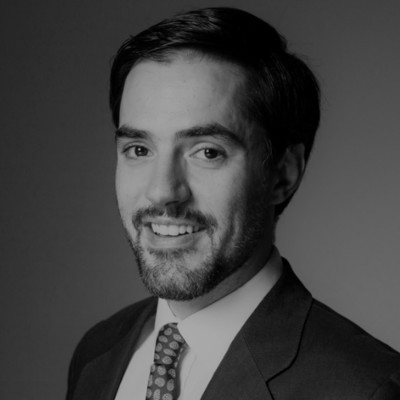
Diego Luca de Tena Costales
PHAROES ADVISORY SL
Diego Luca de Tena Costales
PHAROES ADVISORY SL
Bio
Dr. Diego Luca de Tena Costales is Managing Director at Pharoes Advisory and a power systems, electricity markets, and energy transition specialist with more than 15 years of international experience. He holds a Doctorate in Engineering in sustainable energy systems from the University of Stuttgart, an Industrial Engineering degree with a specialization in power systems from ICAI / Universidad Pontificia de Comillas, and an Executive MBA from IESE Business School. His work focuses on power sector planning, renewable energy integration, electricity market design, transmission expansion, regional power trade, and advanced modelling for investment and policy decision-making. He has led and advised projects for governments, utilities, development institutions, and private investors across Asia, Europe, Africa, the Middle East, and Latin America. Diego has significant experience in South and Southeast Asia, including assignments in India and Malaysia, and has supported projects related to transmission planning, renewable energy procurement, hydropower and storage integration, long-term market forecasting, and regional electricity cooperation. His recent work includes leading transmission needs assessment and renewable energy procurement modelling projects in India, as well as developing advanced platforms for energy transition planning using optimization, AI, and high-performance computing. Before founding and leading Pharoes Advisory, Diego worked with McKinsey & Company, AF Mercados EMI, and the German Aerospace Center. He regularly combines technical power system modelling with policy, regulatory, and commercial analysis to support practical pathways for clean energy deployment and system transformation.
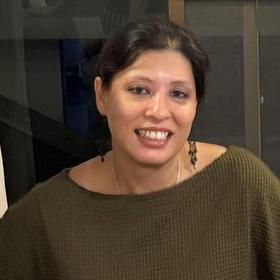
Dikshya Thapa
Tetra Tech
Dikshya Thapa
Tetra Tech
Bio
I integrate social sustainability, gender equality, and community-driven approaches into the design and delivery of energy projects.
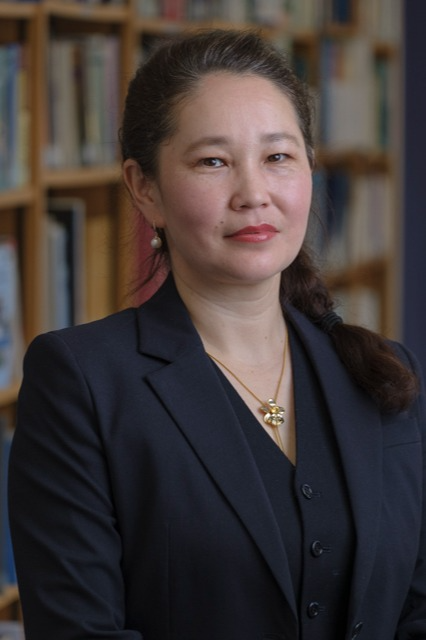
Dina Azhgaliyeva
Asian Development Bank
Dina Azhgaliyeva
Asian Development Bank
Bio
Dina joined EREA in 2024 as Senior Economist (Climate Change). Prior to joining ADB, she was Senior Research Fellow in the Asian Development Bank Institute (Japan). Previously she worked at the National University of Singapore, University of Reading (United Kingdom) and the Ministry of Finance of Kazakhstan. She earned her PhD in economics from the University of Essex (United Kingdom). In the recent years, much of her research analyzes original firm-level data to understand decisions affecting carbon emissions. Just in the past several years, she has published articles in World Development, Energy Economics, Journal of Risk and Financial Management, Journal of Cleaner Production, and Climate Policy. She served as guest editor of Applied Energy, Energy Economics and Journal of Sustainable Finance & Investment.
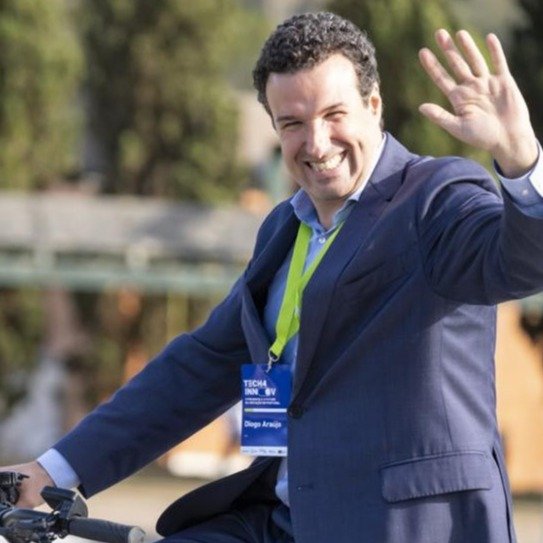
Diogo Gomes de Araújo
Smart Energy Lab
Diogo Gomes de Araújo
Smart Energy Lab
Bio
Diogo Gomes de Araújo is Future Assets Business Developer at Smart Energy LAB (SEL), where he supports the deployment of innovative solutions in electric mobility, energy efficiency, and decarbonisation. With over 20 years of international experience across multilateral institutions, government, and the private sector, Diogo has held senior roles in organisations such as the Portuguese National Innovation Agency, Daimler Trucks Asia, the European Bank for Reconstruction and Development and the African Development Bank. His career has focused on the intersection of innovation and sustainability, with a strong emphasis on mobility and energy transition. At SEL, Diogo works on technology valorisation and scaling solutions such as Living Energy, an open, participatory platform engaging consumers and IoT-enabled to deliver solutions in real-life contexts. His work involves developing partnerships with municipalities, industry players, and international organisations, to ensure valorisation and dissemination of innovative technologies. Diogo holds an MSc in International Banking and Finance from London Metropolitan University, as well as degrees in Economics and International Relations. He is also an invited lecturer at the University of Coimbra and the Polytechnic of Porto, and has previously taught at Porto Business School, focusing on innovation, strategy, and financing. Combining strategic, financial, and business expertise, Diogo contributes to bridging the gap between technological innovation and real-world deployment, supporting the transition towards more inclusive and resilient energy and mobility systems.
Dr. Josef M. Ullmer
PT ANDRITZ Hydro
Dr. Josef M. Ullmer
PT ANDRITZ Hydro
Bio
Dr. Josef M Ullmer has been seasoned Energy Professional in the Electricity Field active in Asia and Oceania for the last four decades. He has devoted his career developing and delivering projects that improve grid stability and ensure reliable electricity supply—from thermal and gas power systems to modern renewable solutions—before finding his long‑term passion in hydropower development across the Middle East, Asia, Australia, New Zealand, and Oceania. Josef, as an Electrical Engineer, has extensive experience in the business development, design, manufacturing, installation and operation and maintenance of Hydro Power projects. His work focuses on renewable and sustainable electric energy, with particular emphasis on integrating intermittent solar and wind generation through hydropower and pumped storage, as well as deploying hydropower for green hydrogen production to achieve net‑zero emissions efficiently and at scale.

Durga Nanda Bariyait
Nepal Electricity Authority
Bio
-
Eduardo H. Karlin
Singapore Energy Interconnectors (SGEI)
Eduardo H. Karlin
Singapore Energy Interconnectors (SGEI)
Bio
Eduardo is Director of Commercial Development at Singapore Energy Interconnections (SGEI), a government appointed company tasked with developing Singapore’s cross border electricity interconnectors. He brings over 15 years of experience in the energy infrastructure sector, having worked or advised on large scale projects across Asia Pacific, Europe, Africa, and Latin America. His experience spans multiple technologies in power generation, including hydropower, offshore and onshore wind, and solar PV. Eduardo is a graduate of Bocconi University (Italy) and the University of Vienna (Austria).
Elizabeth Kirkwood
University of Sydney
Bio
-
Elizabeth Urbanas
U.S. Department of Energy (DOE)
Elizabeth Urbanas
U.S. Department of Energy (DOE)
Bio
Beth Urbanas is the Deputy Assistant Secretary for Asia and the Americas at the Office of International Affairs in the U.S. Department of Energy. Ms. Urbanas is responsible for managing DOE’s bilateral and multilateral engagement with Asian and American countries. Ms. Urbanas is also responsible for DOE's work in several multilateral fora including the North Amerian Leaders' Summit, APEC and ECPA. Prior to her current position, she was the Director for European and Eurasian Affairs at the Office of International Affairs in the U.S. Department of Energy. In this role she was also responsible for DOE's work in the G20 and G7. Prior to working at DOE, Ms. Urbanas spent 14 years at the U.S. Treasury Department where she created and directed the Office of Environment and Energy and represented the United States on the boards of several international organizations including the Global Environment Facility, the Clean Technology Fund, the Millennium Challenge Corporation and the World Bank. Ms. Urbanas started her career in investment management on Wall Street and has also held a staff position at the World Bank. Ms. Urbanas has a B.A. from the College of William and Mary, an M.A. from the State University of New York at Albany, and an M.B.A from George Mason University. Beth Urbanas es Subsecretaria Adjunta para Asia y América en la Oficina de Asuntos Internacionales del Departamento de Energía de los Estados Unidos de América. La Sra. Urbanas es responsable de las relaciones bilaterales y multilaterales con los países asiáticos y americanos. Adicionalmente, está encargada de la labor del Departamento de Energía en varios foros multilaterales, tales como la reunión de Líderes Norteamericanos, así como APEC y ECPA. Anteriormente, fue la Directora para Asuntos Europeos y Euroasiáticos de la Oficina de Asuntos Internacionales del Departamento de Energía. En dicha posición estuvo a cargo del trabajo del Departamento en relación al G20 y el G7. Antes de trabajar en el Departamento de Energía, pasó 14 años en el Departamento del Tesoro de los Estados Unidos de América, donde creó y dirigió la Oficina de Medio Ambiente y Energía, así como que representó a EUA en los consejos directivos de varias organizaciones internacionales como el Fondo para el Medio Ambiente Mundial, el Fondo para la Tecnologías Limpias, la Corporación del Reto del Milenio, y el Banco Mundial. La Sra. Urbanas inició su carrera en gerencia de inversión en Wall Street y también trabajó en el Banco Mundial. La Sra. Urbanas tiene una licenciatura del College of William and Mary y una Maestría de la Universidad Estatal de Nueva York en Albany, así como una Maestría de la Universidad George Mason.
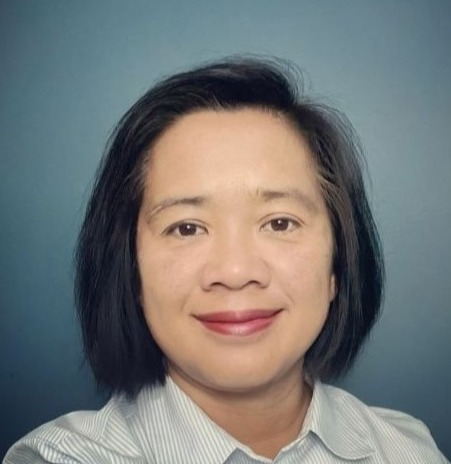
Ellen Bomasang
WynBay Tech
Ellen Bomasang
WynBay Tech
Bio
Ellen Bomasang is a global energy and climate leader with over 25 years of experience advancing clean energy transitions in emerging and developing markets. Her work spans policy and planning, power sector reform, energy access, and institutional strengthening. She has advised governments, donors, utilities, financial institutions, and private developers across Asia, Africa, the Middle East, Latin America, and Eastern Europe. Ellen brings deep expertise in energy governance and results-based program design and implementation, with a strong focus on gender equality and social inclusion. She has advanced women’s representation and leadership, expanded women's access to finance, promoted STEM education for girls, supported male allyship, and addressed gender-based violence and harassment in energy and infrastructure. Across senior roles at Winrock International, AECOM, Deloitte, and Abt Global, and as an advisor to organizations including WynBay Tech, she has worked on programs and initiatives supporting community-led and decentralized electrification, transition finance, public–private partnerships, and workforce capacity building - translating strategy into implementation while advancing just, inclusive energy transitions worldwide.

Emanuele Bianco
ADB
Emanuele Bianco
ADB
Bio
Emanuele Bianco is an Energy Specialist at ADB. In his role, he focuses on developing clean energy projects and strategies in the Asian industrial sectors. Emanuele has also worked with the IRENA and IEA and is the lead author of IRENA’s Green Hydrogen Policy Guides, which present the main policies to support the green hydrogen transition from niche to mainstream. He holds an M.Eng. in Nuclear and Energy Engineering from the Polytechnic School of Turin.
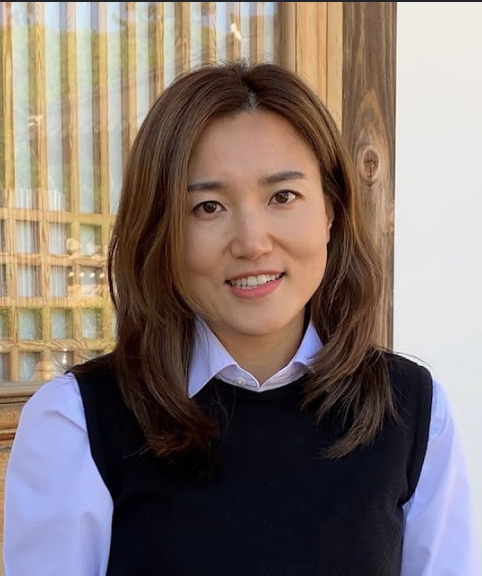
Emily So
Asian Development Bank (ADB)
Bio
-